
Abbiamo visto quali sono gli ami più adatti per gli inneschi con il trancio. Adesso approfondiamo il discorso su quello che genericamente i pescatori indicano col termine “cavetto”. Anche in questo caso ci sono delle news.
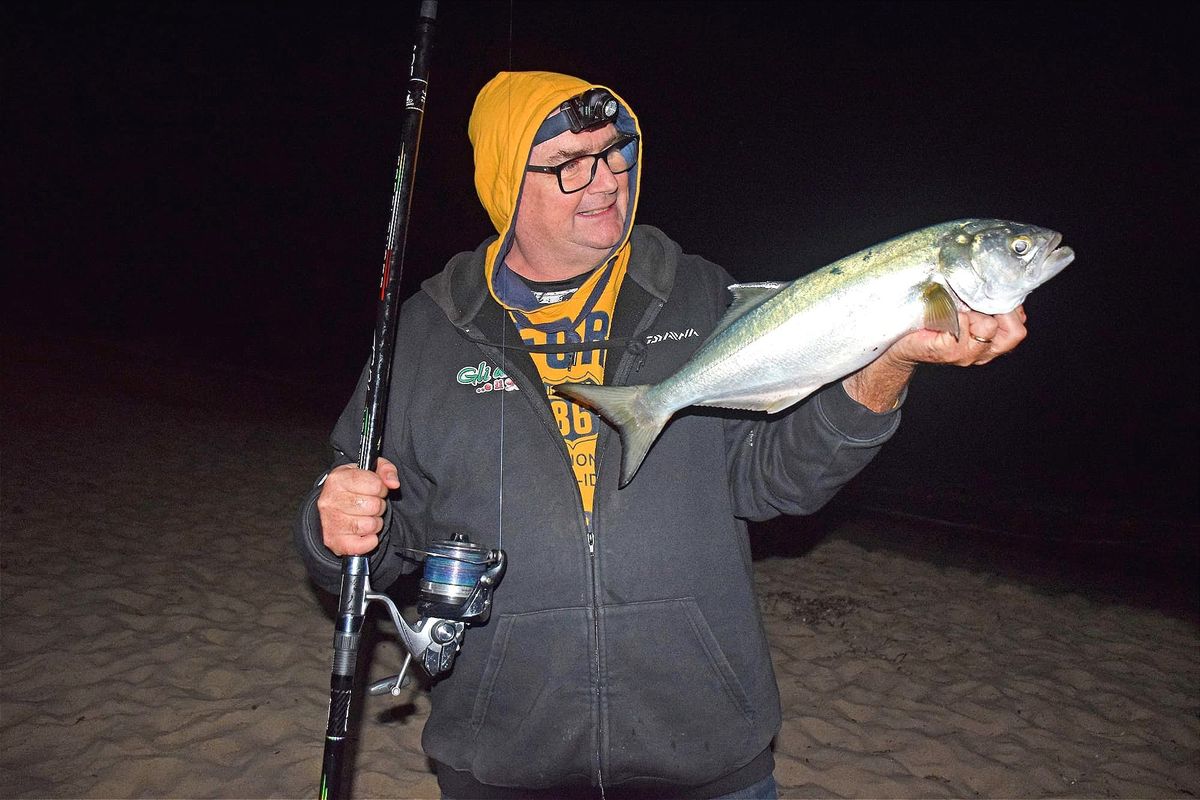
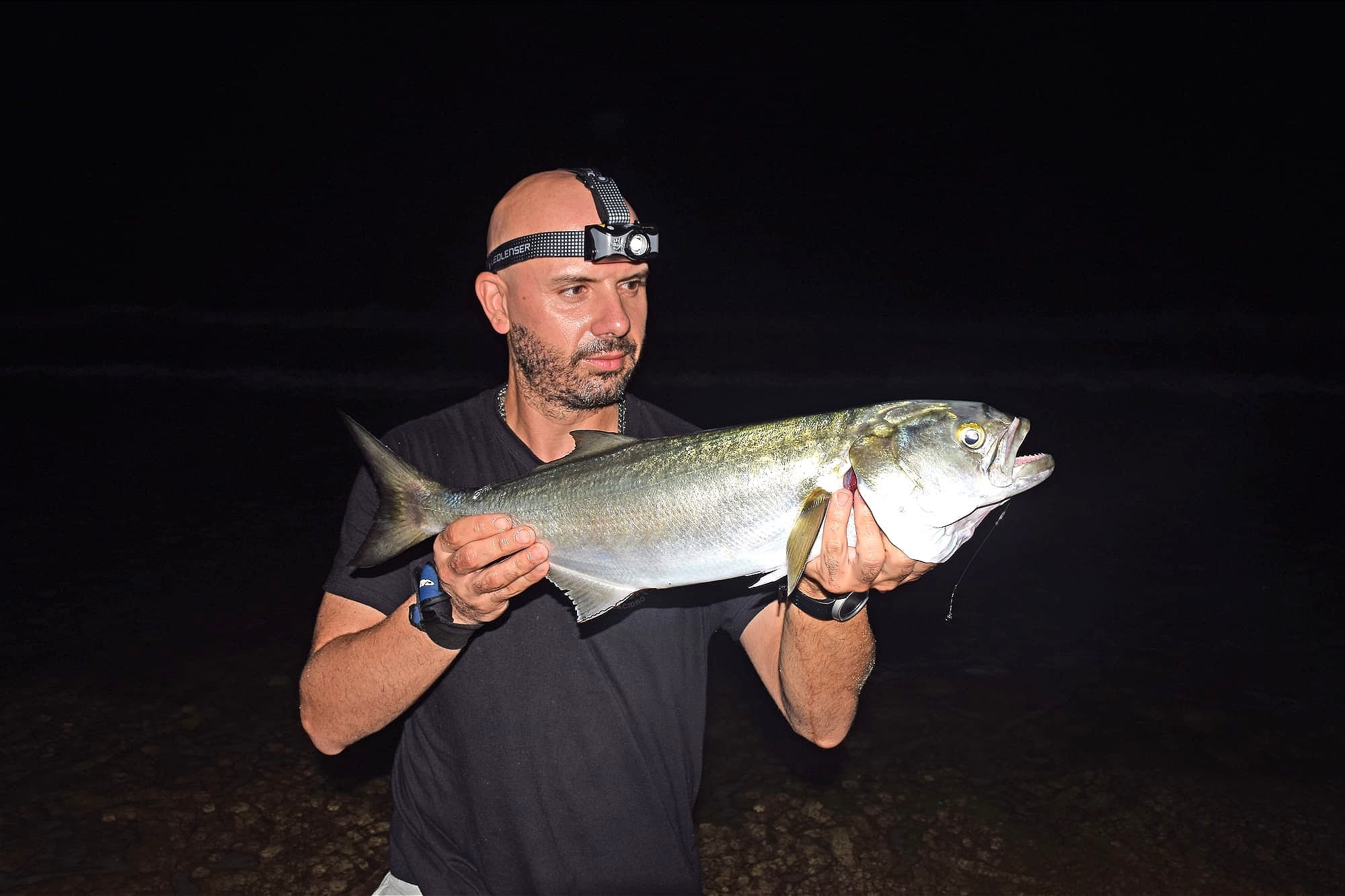
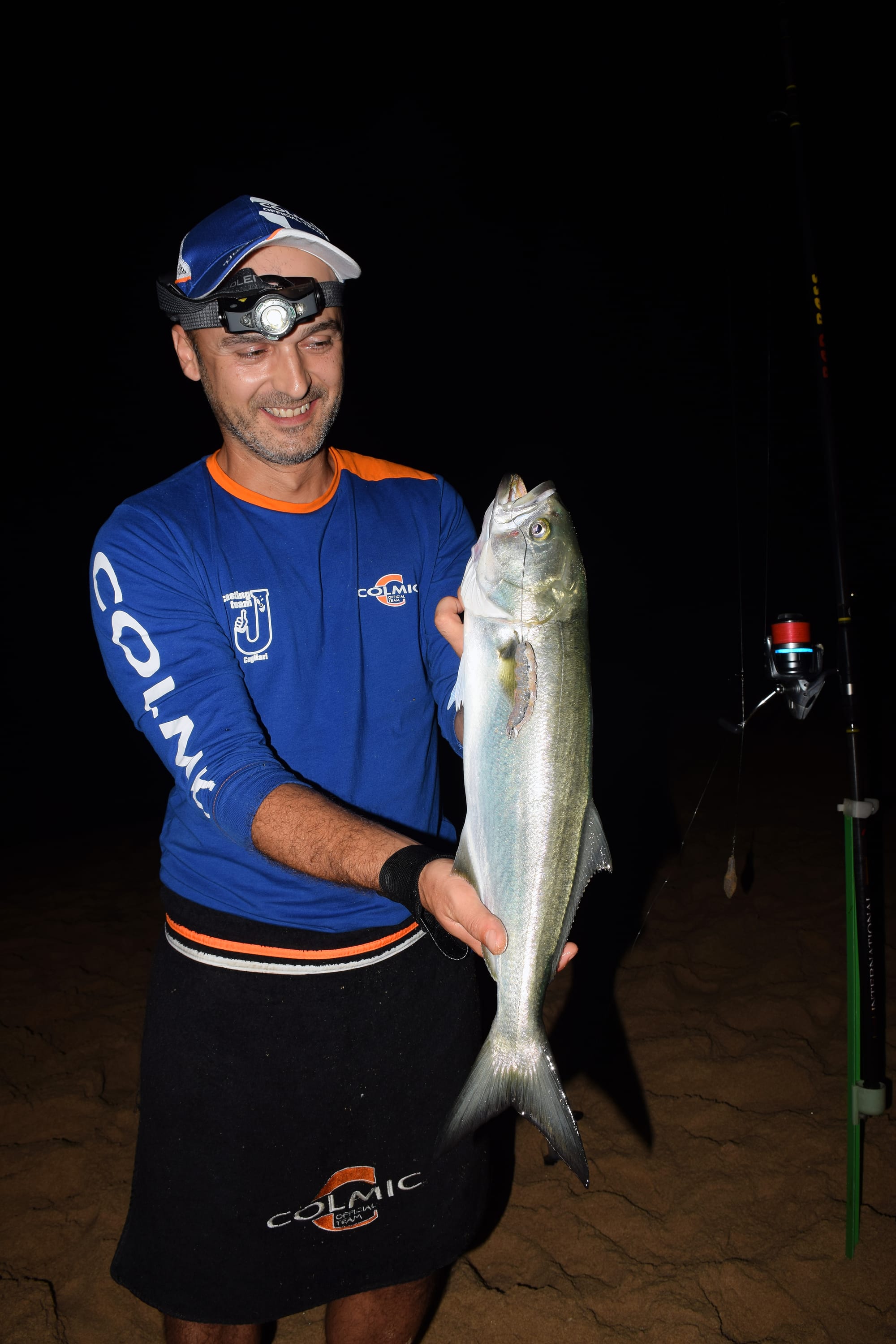
foto in alto: l’autore con una cattura fatta dalla spiaggia di Santa Margherita di Pula. - The author with a bluefish caught from Santa Margherita di Pula beach.
Si usa abitualmente nella pesca al serra dalla spiaggia, ma c’è chi lo sfrutta anche in altre situazioni che sembrerebbero meno adatte, come la tecnica col vivo alla ricerca delle spigole e addirittura in quella dedicata alle grosse orate con inneschi molto coriacei e voluminosi. Stiamo parlando del terminale in acciaio. Questa soluzione ha un unico grande svantaggio: non è per niente mimetica, è molto più visibile rispetto al nylon e al fluorocarbon e quindi diventa assai complicato il suo utilizzo quando vogliamo ingannare pesci astuti. C’è anche un secondo aspetto da tenere in considerazione: la sportività. Il terminale in acciaio lascia poco scampo alla preda a meno che questa non ingoi tutto e tagli la lenza a monte, situazione che però dobbiamo evitare perché il pesce rimarrebbe, seppur libero, con in bocca l’ingombrante esca e gli ami. Ecco, quindi, la necessità di utilizzare terminali abbastanza lunghi, in modo da evitare la perdita accidentale del grosso boccone. In campo agonistico è permesso il suo utilizzo, salvo alcuni casi in cui viene chiesto specificatamente di pescare solo con lenza. Detto questo vediamo cos’è e come si utilizza il terminale d’acciaio.
Treccia o cavetto? - Brevemente descriviamo il terminale per l’utilizzo del trancio di muggine o affini (trancio di spigola, salmone o pollo e piccole mormore, sparlotte e occhiate pescate in loco). Alla lenza del mulinello si collega un trave con piombo fisso, ma lo stesso vale per le parature con piombo scorrevole. Sul trave, grazie a uno sgancio che può essere girella o tecnosfera, si collegano circa 30 centimetri di fluorocarbon dello 0,40 o appena superiore. A questo, con una girella piccola ma con carico di rottura adeguato, si lega il terminale d’acciaio, della lunghezza di circa 30 centimetri su cui è fissato l’amo. Un secondo amo si può far scorrere sul cavetto per aggiungere un inganno al trancio. L’acciaio è una lega di ferro e carbonio, duttile e quindi facile da rendere filiforme; è anche caratterizzato da un’ottima resistenza alla trazione e torsione. A volte, sbagliando, si usano i termini treccia e cavetto indistintamente, per indicare genericamente il terminale in acciaio. Ma stiamo parlando di due cose diverse. La treccia d’acciaio è formata dall’unione di tanti fili sottilissimi, appunto intrecciati tra loro. Si ottiene un filo morbido, con una sezione ovale, facile da piegare e arrotolare intorno all’occhiello di un amo o di una girella. La treccia però rimane più spessa (a parità di carico di rottura) rispetto a un cavetto singolo. Per “confezionare” la paratura per il serra si utilizza la treccia rivestita con una sottile guaina trasparente termosaldante che permette di fissare in modo sicuro la treccia sia all’amo che al moschettone. Il cavetto invece è un unico filo d’acciaio che risulta più sottile ma è meno morbido della treccia. La scelta tra i due è solo una questione di gusti personali, anche se la paratura con cavetto è sicuramente più “elegante” alla vista.
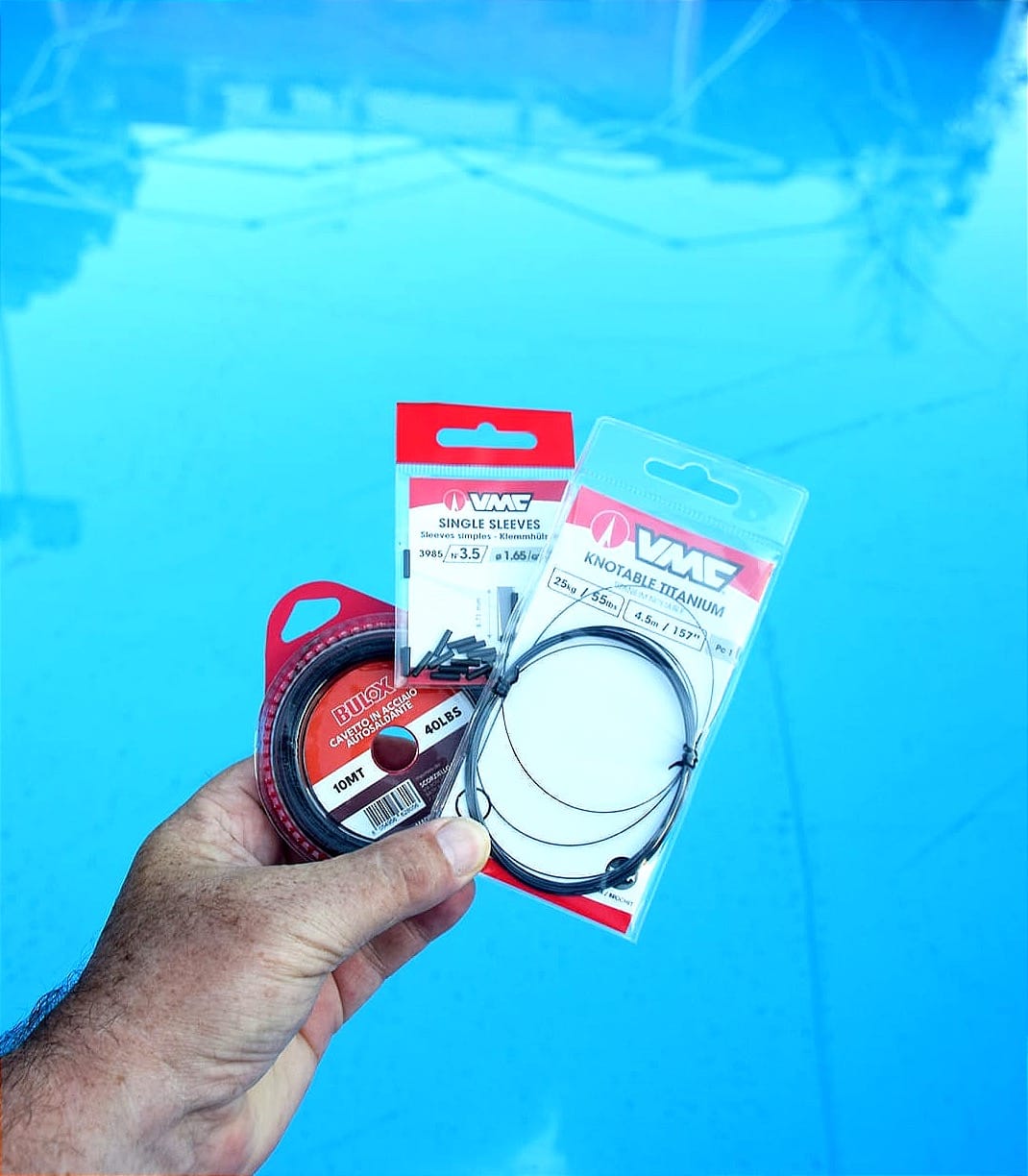
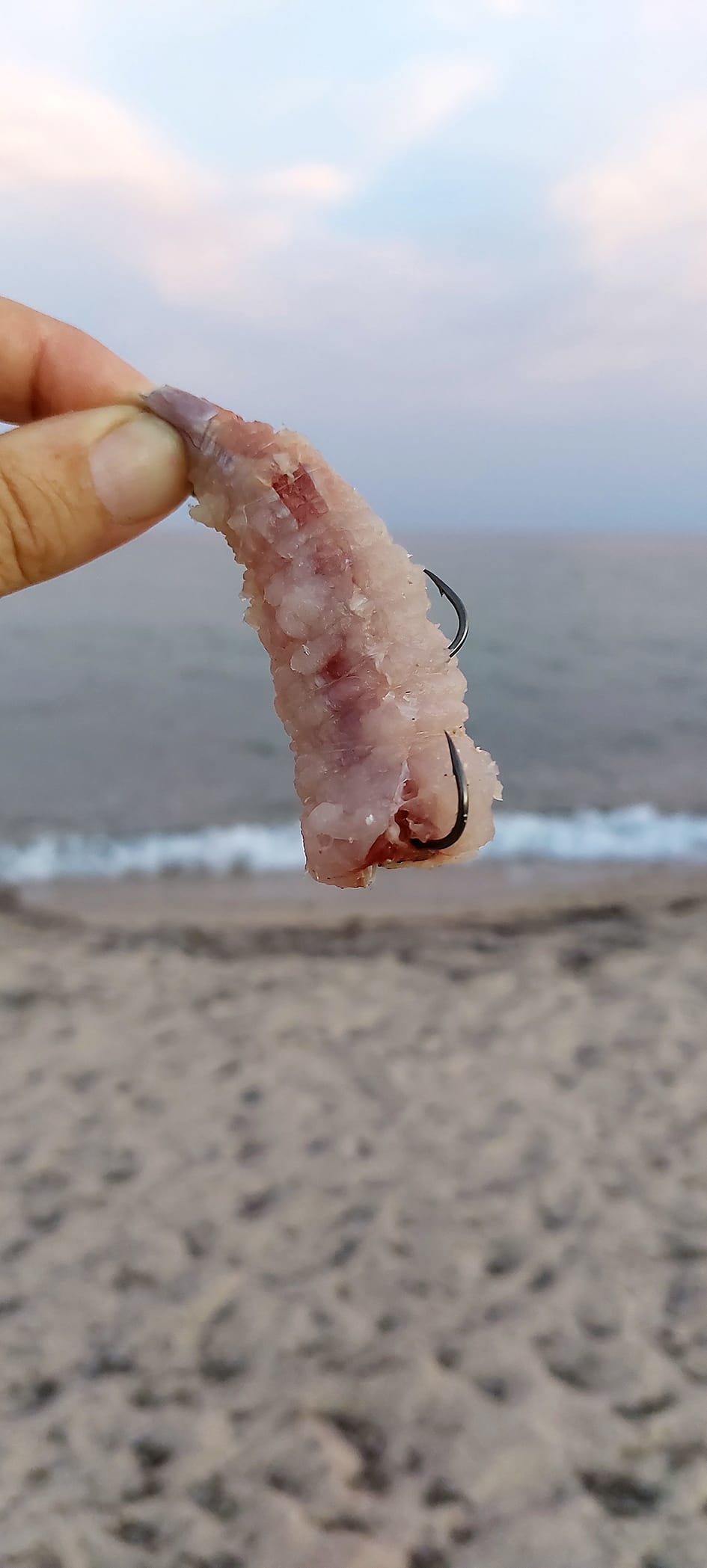
Cavetti in acciaio e in titanio; il secondo, a parità di carico è molto più sottile e leggero. Trancio di muggine innescato con due ami rivestiti in teflon. - Steel and titanium traces; for the same breaking strain, titanium is much thinner and lighter. A chunk of mullet rigged with two Teflon-coated hooks.
Titanio - Esiste una terza soluzione: il titanio. Da tanti anni si utilizzano fili in titanio nella pesca dei lucci in acqua dolce. Il titanio è un materiale che sempre più trova spazio in ambito sportivo, dai componenti per le bici di alta fascia a quelli per mulinelli e anelli per le canne da pesca. Sempre a parità di sezione, il titanio sopporta un carico maggiore rispetto all’acciaio e ha un peso specifico quasi della metà rispetto alla lega di ferro e carbonio; è venduto in piccole bobine e da subito salta all’occhio lo spessore davvero sottile. Per confezionare la paratura col filo in titanio è meglio utilizzare una particolare pinza crimpatrice di precisione e coprire le zone d’attacco (amo e girella) con della guaina termorestringente. Un lavoro che è sempre meglio fare a casa visto che c’è bisogno di tempo, pazienza e accuratezza. Esistono in commercio dei fili in titanio sottilissimi, ideati per essere fissati all’amo con un “semplice” nodo. In realtà anche questi fili, per essere adeguatamente bloccati, hanno bisogno di essere serrati con grosse pinze e tanta forza, un lavoro sicuramente scomodo da fare in spiaggia. Il finale in titanio, seppur molto laborioso da realizzare, è molto leggero e lineare alla vista, tanto da giustificare il suo utilizzo anche con esca viva, soprattutto in questo periodo, tra estate e autunno, nel quale a predare non sono solo serra, ma anche le prime spigole e grosse lecce. Il colore nero ne consiglia l’utilizzo la notte o in spot con molta schiuma e onde, dove evidenzia anche un alto punto a favore: un filo sottile e rigido difficilmente si ingarbuglia. E questo non è un fattore da sottovalutare quando vogliamo rimanere in pesca anche in condizioni al limite.
English version
We have looked at the best hooks for fishing with cut baits. Now let’s take a closer look at what anglers generally refer to as a “wire trace”. There are some new developments here, too.
Wire traces are commonly used when fishing for bluefish from the beach, but some anglers also use them in seemingly less suitable situations, such as live-bait fishing for sea bass, or even targeting large gilthead sea bream with particularly tough, bulky baits. We are talking about steel traces. This solution has one major drawback: it is far from inconspicuous. Steel is much more visible than nylon or fluorocarbon, making it difficult to use when trying to outwit wary fish.
There is also a second consideration: sporting fairness. A steel trace gives the fish little chance of escape unless it swallows the entire bait and bites through the line above it. That is something we must avoid, however, because the fish would swim away with the bulky bait and hooks still in its mouth. This is why traces need to be long enough to prevent the large bait from being bitten off accidentally. Steel traces are permitted in competitions, except where the rules specifically require anglers to use only fishing line. With that said, let’s look at what a steel trace is and how to use it.
Braided or Single-Strand Wire
Let’s briefly describe a rig for fishing with a chunk of mullet or similar bait, such as a piece of sea bass, salmon or chicken, or small striped sea bream, annular sea bream and saddled sea bream caught at the venue.
The reel’s main line is connected to a rig body with a fixed lead, although the same principle applies to running-lead rigs. Around 30 cm of fluorocarbon, 0.40 mm in diameter or slightly thicker, is attached to the rig body using a swivel or a Tecnosfera connector. A small swivel with a suitable breaking strain then joins this section to approximately 30 cm of steel trace carrying the hook. A second hook can be fitted so that it slides along the wire, adding another hooking point to the bait.
Steel is an alloy of iron and carbon. It is ductile, making it easy to draw into fine wire, and offers excellent tensile and torsional strength. The terms “braided wire” and “single-strand wire” are sometimes incorrectly used interchangeably to refer to steel traces in general. They are, however, two different things.
Braided steel wire consists of numerous extremely fine strands woven together. The result is a supple wire with an oval cross-section, which is easy to bend and wrap around the eye of a hook or swivel. For the same breaking strain, however, braided wire is thicker than single-strand wire. Bluefish rigs are made using braid with a thin, transparent, heat-fusible coating, which allows it to be secured firmly to both the hook and the snap.
Single-strand wire, by contrast, consists of one steel strand. It is thinner but less supple than braid. Choosing between the two is largely a matter of personal preference, although a single-strand wire rig certainly looks neater.
Titanium
There is a third option: titanium. Titanium wire has been used for freshwater pike fishing for many years. This material is increasingly common in sporting equipment, from high-end bicycle components to fishing reel parts and rod guides.
For the same cross-section, titanium can withstand a greater load than steel, while its density is almost half that of the iron–carbon alloy. It is sold on small spools, and its exceptionally fine diameter is immediately noticeable.
When making a titanium-wire rig, it is best to use precision crimping pliers and cover the attachment points at the hook and swivel with heat-shrink tubing. This is a job best done at home, as it requires time, patience and care.
Extremely fine titanium wires designed to be attached to the hook with a “simple” knot are also available. In practice, these wires still require large pliers and considerable force to tighten them securely—a decidedly awkward task on the beach.
Although making a titanium trace takes considerable effort, the finished result is very light and visually unobtrusive. This makes it worth considering even for live-bait fishing, particularly during the transition from summer to autumn, when bluefish are joined by the first sea bass and large leerfish.
Its black colour makes it best suited to night fishing or spots with plenty of foam and waves. In these conditions, it offers another significant advantage: thin, stiff wire is unlikely to tangle. That is no small consideration when we want to keep fishing in challenging conditions.
Commenti ()