
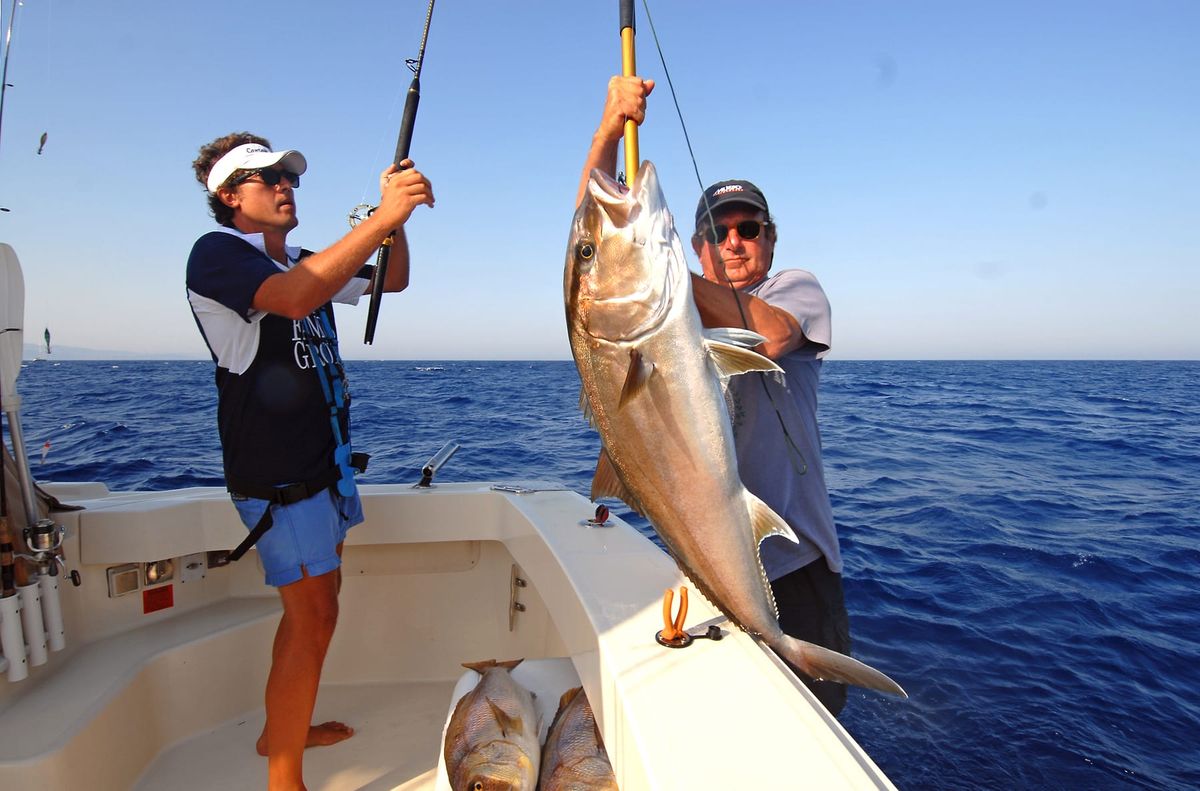
L’aguglia, rappresenta una pietra miliare che ha contribuito alla storia della pesca moderna. Negli anni ha ceduto spazio a esche come calamari e lanzardi, ma tutt’oggi, è ancora in grado di dare eccellenti risultati.
Nella pesca e soprattutto nella traina, molte specie oggetto d’interesse, sviluppano una sorta di autodifesa nei confronti dei metodi più comunemente usati per insidiarli. Questo è dovuto presumibilmente all’innato istinto di conservazione delle specie. Nella pratica, un’esca o una situazione che per anni ha avuto successo con alcuni predatori, gradatamente perde efficacia perché collegata a un possibile pericolo. Questo ha portato a continue variazioni sugli inneschi e sugli assetti di pesca, così da variare gli standard ormai riconosciuti dai predatori.
Il tramonto di un mito - L’aguglia per decenni è stata l’esca più usata, quasi l’unica, tanto che per ottimizzarne la cattura sono stati studiati espedienti di tutti i tipi, tra cui la celeberrima ed efficacissima matassina Skeinfish. Questa non è altro che un’ingegnosa quanto semplice trappola colorata, costituita da un filato naturale che, quando trainata, si aggroviglia nel rostro dell’aguglia, senza danni per l’animale. Facile da catturare, abbastanza resistente nella vasca del vivo, semplicissima da innescare e con una vitalità senza eguali anche se trainata per ore, l’aguglia ha rappresentato l’esca regina della traina con il vivo fin dalla nascita di questa tecnica. A fronte del suo uso prolungato però e dell’insistenza con cui veniva trascinata a fondo (fascia d’acqua che in natura non frequenta e quindi un po’ anomala per la sua normale esistenza), dopo anni e anni di attività è stata smascherata da molte specie ittiche di nostro interesse, e annoverata tra i possibili pericoli, con il risultato che da esca regina è stata sostituita con esche più “nuove” o dichiaratamente più efficaci.
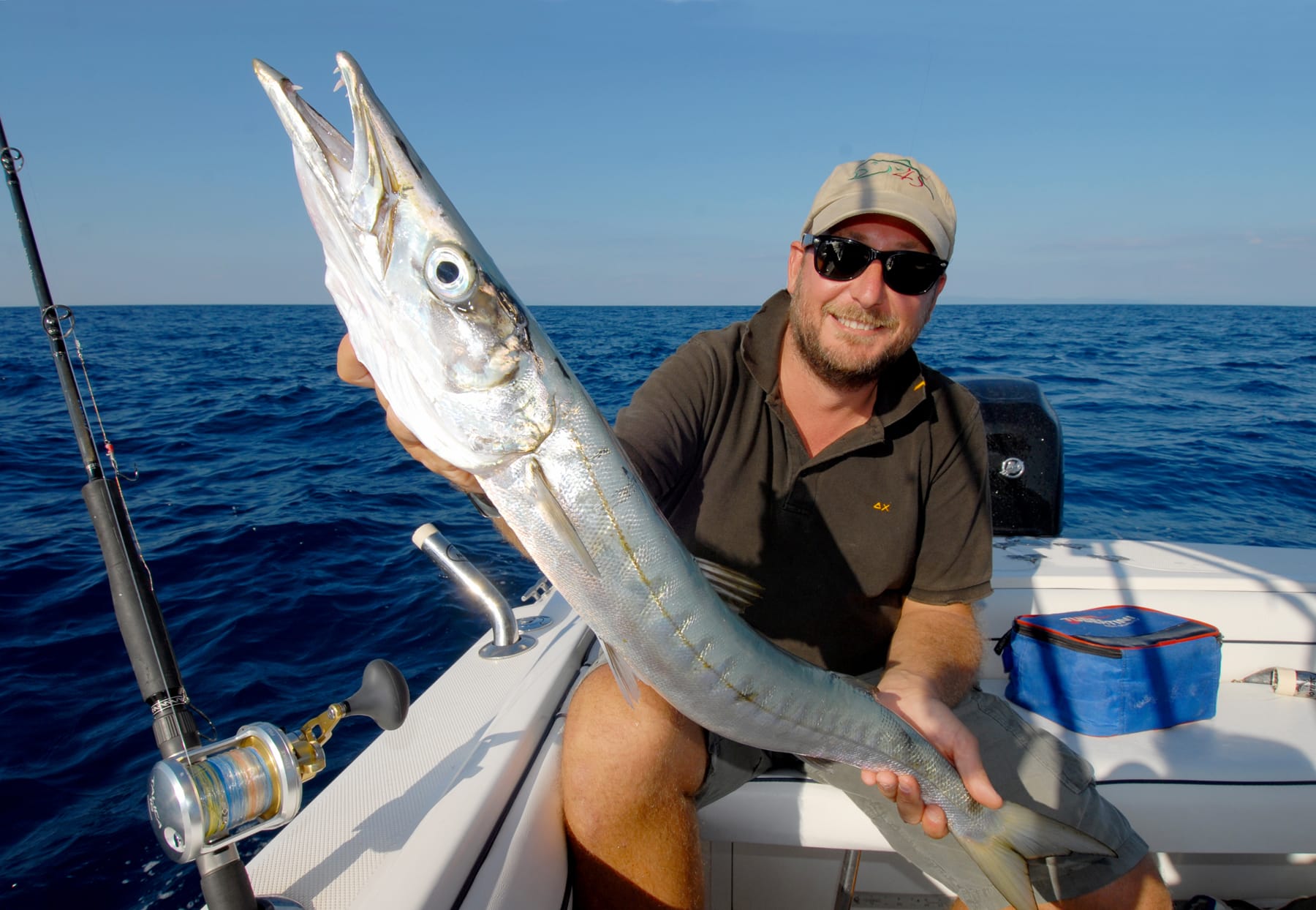
In effetti l’aguglia non catturava più, sembrava quasi che molti predatori la evitassero, segno evidente che l’anomalia di un pesce di superficie e gregario, che nuota in solitudine radente al fondo, era talmente eclatante da non poter essere più ignorata. Così un’esca che per anni era stata il cavallo di battaglia di una tecnica, non era più catturante e veniva usata soltanto in mancanza d’altro o in situazioni d’emergenza. In quegli anni si sono rivalutate esche come l’occhiata, la seppia, il muggine e ovviamente il calamaro. Ma la storia si ripete e anche molte delle esche che avevano soppiantato l’aguglia, cominciano a essere meno catturanti, e in molti si stanno riavvicinando alla cara e vecchia compagna, verde e blu, di tante pescate .
Qualità ineguagliabili - L’aguglia come accennato, è un’esca che presenta peculiarità uniche nel suo genere. La sua forma oblunga ha caratteristiche altamente idrodinamiche, con minima resistenza all’avanzamento. Questo fattore è importantissimo, perché consente di portarla a velocità di gran lunga superiori alle altre esche, le quali, se trascinate veloci, potrebbero tendere a ruotare. In considerazione di questo, si ottiene una traina più veloce, che, nel caso di aguglie grandi, può superare i 2 nodi, con notevoli vantaggi relativi allo spazio percorso e alla naturalezza dell’esca. A questo bisogna aggiungere che è un’esca particolarmente tenace e vitale: non solo resiste per ore con gli ami infissi, ma, grazie all’incedere sinuoso, continua ad avere un alto potere catturante, anche se smette di nuotare e si lascia trascinare passivamente. Per evitare di comprometterne la vitalità è indispensabile evitare di toccarla con le mani nude e usare uno straccio bagnato, senza toccare punti vitali con gli ami al momento dell’innesco.
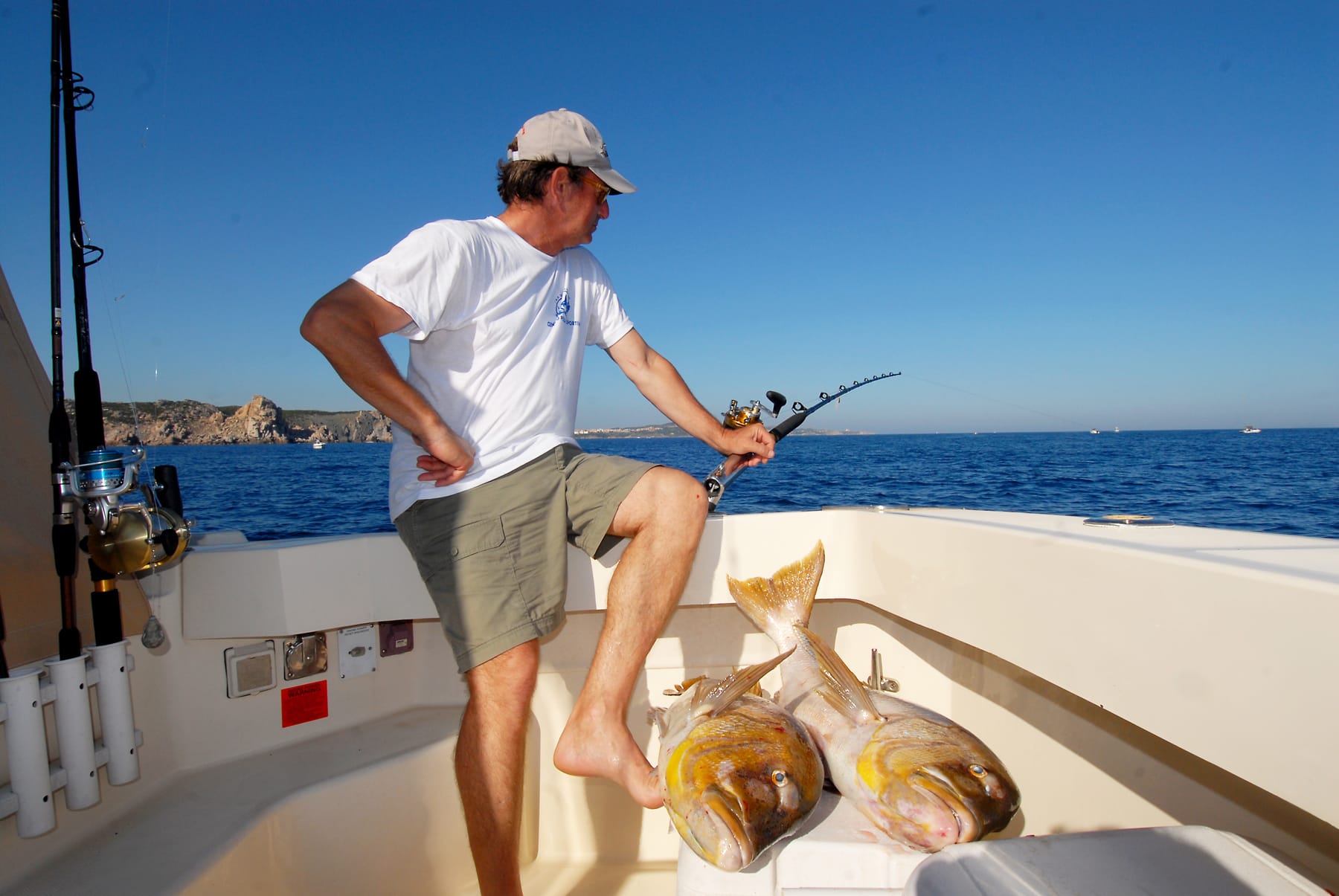
Assetti di pesca - Come già detto l’aguglia è un pesce gregario che vive nella fascia d’acqua superficiale. Presentarla radente al fondo e da sola, potrebbe apparire un’anomalia ed essere rifiutata, fermo restando che per anni tale sistema è stato usato con eccellenti risultati. L’aguglia come accennato, tra le varie caratteristiche che la contraddistinguono, consente una traina più veloce e questo deve essere considerato, in relazione all’assetto di pesca e al sistema d’affondamento. La traina classica con il piombo guardiano offre l’impagabile vantaggio di far lavorare l’esca sempre vicino al fondo, facendole ispezionare gli avvallamenti tra le rocce e portandola sotto le cigliate. Tale sistema d’affondamento, però, risulta funzionante se si procede a velocità idonee, ovvero non superiori a 1,5-1,7 nodi. Con l’aumentare della velocità l’attrito della lenza e soprattutto del piombo, sull’acqua, solleva il complesso pescante rendendo meno efficace il piombo guardiano. Per ottimizzare l’azione di pesca e trainare un’esca anche a 2 nodi, è necessaria la frazionatura del piombo sulla lenza. La distribuzione ad hoc del peso, limita l’attrito e favorisce un affondamento più lineare dell’esca tra il mezzo-fondo e il fondo. Quest’esca sarà ben visibile sia dai predatori che cacciano a mezz’acqua, che da quelli che sono in agguato vicino al fondo. Per ottimizzare l’azione di pesca ed esplorare una fascia d’acqua maggiore, una seconda esca la faremo lavorare più affondata con un unico piombo guardiano il quale, per effetto della velocità, non lavorerà vicinissimo al fondo ma leggermente sollevato. Per farla scendere possiamo levare la marcia ogni tanto e attendere che il guardiano tocchi il fondo. Questo oltre che a darci modo di far passare l’insidia tra le rocce, farà variare la velocità dell’esca dandogli un maggiore potere attirante. Un altro sistema per far scendere l’esca sotto le cigliate consiste nell’effettuare la virata dalla parte della canna con il guardiano, dandogli modo di scendere per effetto della virata.
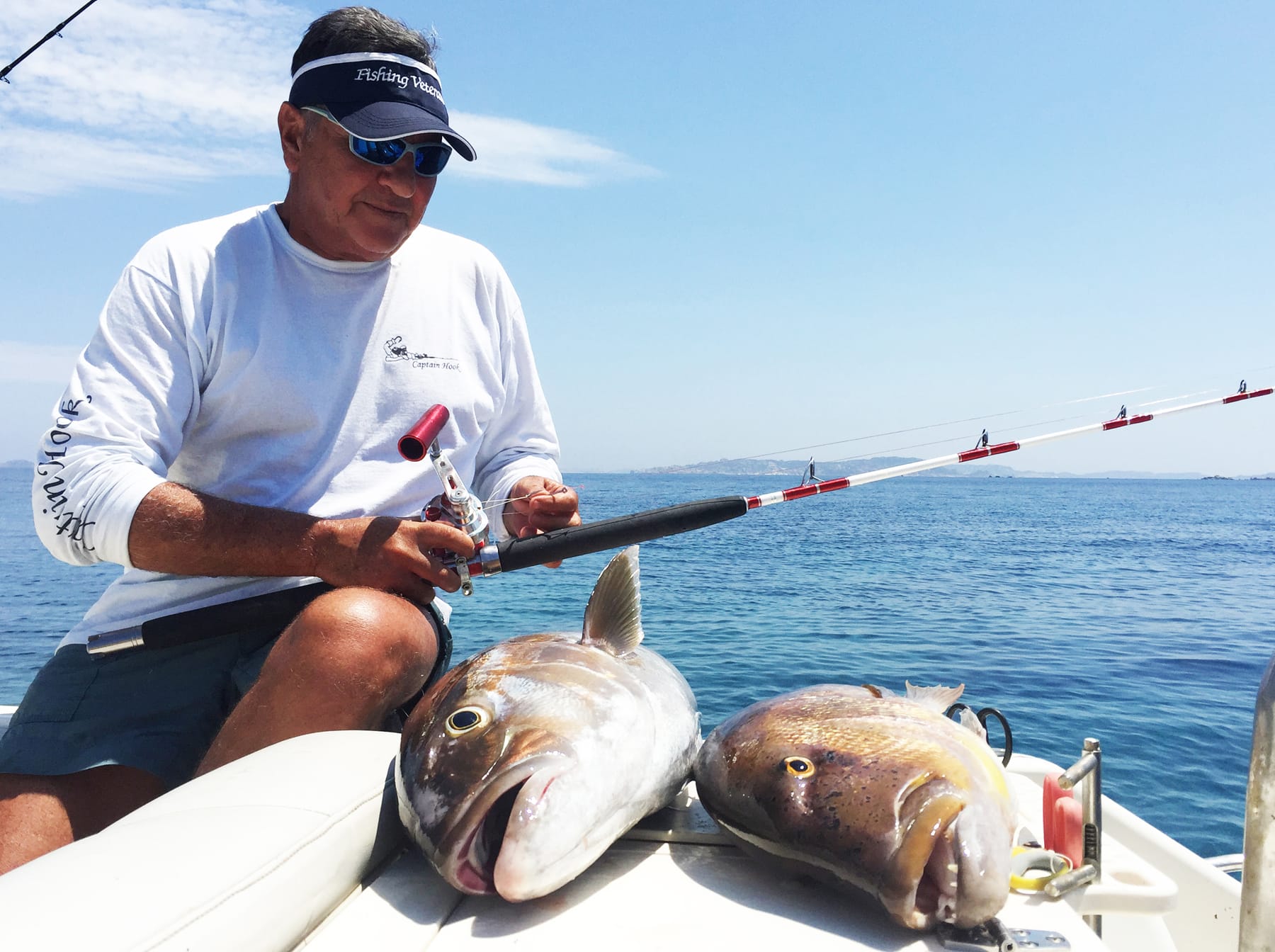
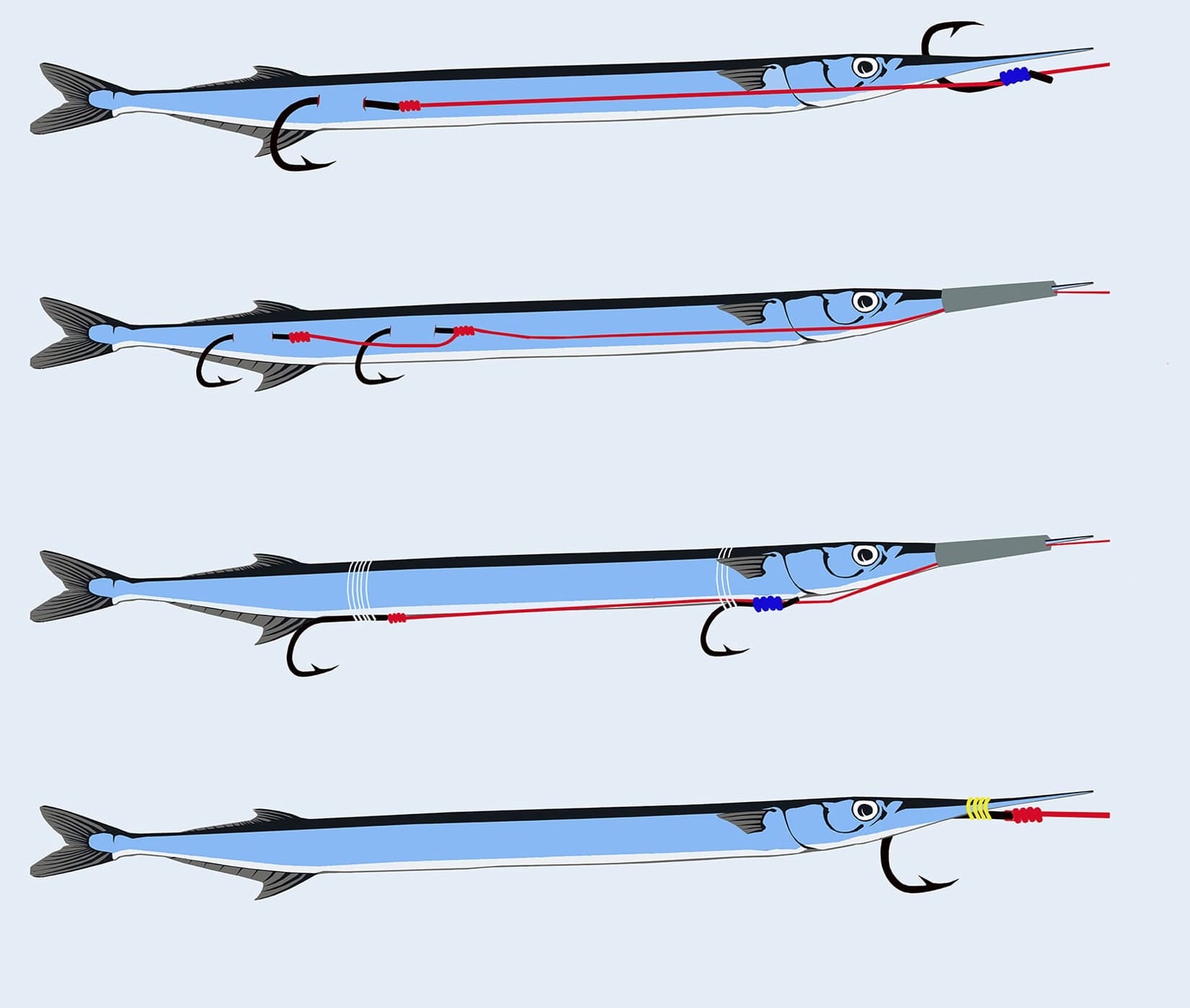
Gli inneschi - Bisogna partire dal presupposto che un’aguglia se innescata bene, deve sopravvivere a tutta l’azione di pesca e se non mangiata da un predatore, una volta slamata deve andar via tranquillamente. Questo implica che il posizionamento degli ami non deve ledere in alcun modo la vitalità dell’esca. Per quanto riguarda la scelta degli ami bisogna considerare che in gran parte dei casi bisognerà inserirli sotto pelle, quindi saranno sempre da preferire ami con sezione sottile. Un altro parametro è relativo alla grandezza dell’amo trainante. Molti predatori tra cui la riccola e la leccia, attaccano le prede in testa e nel caso si utilizzi un amo che non fuoriesce bene dal rostro, ci sono buone possibilità di non allamare la preda. Il sistema più classico d’innesco é quello con due ami fissi, legati sullo stesso terminale, a una distanza che permetta di inserire il primo dal basso verso l’alto a chiudere entrambe le protuberanze che formano il rostro, e il secondo sottopelle lateralmente, in prossimità della pinna anale. Tale sistema d’innesco é il più usato e il più pratico e viene eseguito con entrambi gli ami delle stesse dimensioni, rapportate a quelle dell’esca. L’evoluzione di tale innesco ha portato a rendere il primo amo (quello trainante) scorrevole sul terminale, ma per realizzare ciò bisogna pensare che questo, scorrendo, potrebbe intaccare il filo. Un altro innesco che poi é quello che risulta più pulito, consiste nel fermare il becco dell’aguglia con un tubicino di plastica e inserire gli ami sottopelle a metà corpo e vicino alla coda. Si tratta di un innesco indicato per pesci che attaccano l’aguglia in coda tra cui il dentice e il serra. Lo stesso tipo d’innesco si può realizzare legando gli ami con del filo elastico non ledendo minimamente la vitalità dell’esca. Un ultimo innesco che viene usato quando si dispone di aguglie piccole o quando si devono usare ami molto grandi. Consiste nel fissare uno spezzone di filo di rame di cm 7-8 circa all’occhiello dell’amo e con questo si fora il rostro dell’aguglia per poi chiudere il rostro stesso avvolgendocelo intorno. Quest’innesco si usa prevalentemente per la traina alle ricciole o ai tonni quasi in superficie.
L’azione di pesca - La pesca con l’aguglia viva é una delle tecniche maggiormente praticate, va eseguita sempre pensando che l’esca va presentata come se navigasse libera da vincoli e tranquillamente. In base alla grandezza dell’esca è importante mantenere una velocità tale da farla navigare in maniera ottimale. Con aguglie piccole si procede a 1,2-1,5 nodi, con le medie si può arrivare a 2 nodi, mentre con esche di grandi dimensioni la velocità deve essere compresa tra 1,8 e 2,5. Essendo un pesciolino che nuota sinuosamente variare spesso la velocità sarà un modo per renderlo più guizzante e attirante. Generalmente sono consigliati “stop and go”, mettendo il motore in folle e ingranando la marcia successivamente, oppure dare improvvisi colpi di gas per accelerare l’andatura. Pescando a mezz’acqua ricciole o lecce è preferibile tenere la frizione del mulinello al limite dello slittamento in modo da far ingoiare l’esca al predatore, che spesso l’afferra a metà corpo. La pesca con l’aguglia se eseguita con tutti gli accorgimenti, può essere un’arma micidiale e rappresenta una delle tecniche più antiche ed efficaci.
English version
The garfish, the ultimate live bait, is one of the cornerstones that helped shape the history of modern sport fishing. In recent years, it has given way to more highly regarded baits such as squid and mackerel, yet even today, when used by reviving traditional live-bait trolling methods, it is still capable of delivering excellent results. In fishing, and especially in trolling, many target species develop a sort of natural defence against the methods most commonly used to catch them. This is presumably due to their innate instinct for survival. In practice, a bait or fishing situation that has proved successful for years with certain predators gradually loses its effectiveness because it becomes associated with a potential danger. This has led anglers to continually modify baiting techniques and fishing rigs in order to change the patterns that predators have come to recognise.
The Decline of a Myth - For decades, the garfish was the most widely used—and almost the only—live bait, so much so that all kinds of methods were devised to optimise its capture, including the famous and highly effective Skeinfish. This is nothing more than an ingenious yet simple coloured trap, made from natural fibres which, when towed through the water, become entangled around the garfish’s beak without causing any harm to the fish. Easy to catch, reasonably hardy when kept in the livewell, extremely simple to rig, and capable of retaining an unmatched vitality even after being trolled for hours, the garfish has been the undisputed queen of live-bait trolling since the very beginning of this technique. However, because of its prolonged and widespread use—and the persistence with which it was dragged along close to the bottom, a depth range it does not normally inhabit in nature and therefore somewhat unnatural for its usual behaviour—after years and years of fishing pressure it eventually became “unmasked” by many of the fish species we target and came to be associated with a potential threat. As a result, the once undisputed queen of live bait was replaced by more “novel” baits or by those considered to be more effective. Indeed, the garfish seemed to stop producing results, almost as if many predators had begun to avoid it. This was clear evidence that the anomaly of a schooling, surface-dwelling fish swimming alone close to the seabed had become far too obvious to be ignored. So, a bait that for years had been the trump card of the technique was no longer producing results and was used only when nothing else was available or in emergency situations. During those years, baits such as saddled bream, cuttlefish, mullet and, of course, squid were reassessed. But history repeats itself, and many of the baits that had replaced the garfish are now becoming less effective too. As a result, many anglers are once again turning to their old green-and-blue companion of so many fishing trips.
Unmatched Qualities - As mentioned, the garfish has unique characteristics that make it an exceptional bait. Its elongated shape is highly hydrodynamic, offering minimal resistance as it moves through the water. This is extremely important because it allows the bait to be trolled at considerably higher speeds than other baits, which may tend to spin when towed too fast. As a result, trolling can be carried out at higher speeds and, when using large garfish, can exceed 2 knots, providing significant advantages in terms of the distance covered and the bait’s natural presentation. Added to this is the garfish’s remarkable toughness and vitality. Not only can it survive for hours with hooks rigged in place, but thanks to its sinuous swimming action, it continues to have a strong attraction power even when it stops swimming and is simply dragged passively through the water. To avoid compromising its vitality, it is essential never to handle the garfish with bare hands. Instead, use a wet cloth and take care not to place the hooks near vital areas when rigging the bait.
Fishing Rigs - As mentioned earlier, the garfish is a schooling fish that lives in the upper layers of the water column. Presenting it alone and close to the seabed could appear unnatural and lead predators to reject it, although this method has been used successfully for many years. Among its various distinctive characteristics, the garfish allows for faster trolling, and this must be taken into account when choosing the fishing rig and the sinking system. Traditional trolling with a guardian sinker offers the invaluable advantage of keeping the bait constantly close to the bottom, allowing it to probe the depressions between the rocks and pass beneath underwater ledges. However, this sinking system works effectively only at suitable speeds, namely no more than 1.5–1.7 knots. As speed increases, the drag produced by the line and, above all, by the sinker moving through the water lifts the entire rig, making the guardian sinker less effective. To optimise the fishing action and troll a bait at speeds of up to 2 knots, the sinker needs to be distributed along the line in several sections. Properly distributing the weight reduces drag and promotes a more consistent, linear descent of the bait between mid-water and the seabed. This allows the bait to be clearly visible both to predators hunting in mid-water and to those lying in wait close to the bottom. Besides allowing the bait to pass between the rocks, this also changes its speed, giving it greater attracting power. Another way to make the bait descend beneath underwater ledges is to turn the boat towards the side of the rod equipped with the guardian sinker, allowing the sinker to drop as a result of the turn.
Rigging the Bait - The starting point is that a properly rigged garfish should survive throughout the entire fishing session and, if it is not taken by a predator, should be able to swim away unharmed once released. This means that the positioning of the hooks must in no way compromise the bait’s vitality. When choosing the hooks, it should be considered that in most cases they will have to be inserted just beneath the skin, so thin-gauge hooks should always be preferred. Another important factor is the size of the leading hook. Many predators, including amberjack and leerfish, attack their prey head-on, and if the hook does not protrude sufficiently from the garfish’s beak, there is a good chance of failing to hook the predator. The most traditional rig consists of two fixed hooks, tied to the same leader and positioned at a distance that allows the first hook to be inserted from underneath and upwards, securing both projections that form the garfish’s beak, while the second is inserted beneath the skin laterally, close to the anal fin. This is the most widely used and practical rig, with both hooks being the same size and matched to the size of the bait. An evolution of this rig involves making the first hook—the leading hook—sliding along the leader. However, when using this system, it is important to consider that the sliding hook may damage or weaken the leader as it moves. Another rig, and arguably the cleanest, involves securing the garfish’s beak with a small plastic tube and inserting the hooks beneath the skin, one around the middle of the body and the other close to the tail. This rig is particularly suitable for predators that attack garfish from behind, including dentex and bluefish. The same type of rig can also be made by securing the hooks with elastic thread, without compromising the bait’s vitality in any way.
A Final Rig - One final rig is used when fishing with small garfish or when very large hooks are required. It consists of attaching a 7–8 cm length of copper wire to the hook eye. The wire is then used to pierce the garfish’s beak, after which the beak is secured by wrapping the copper wire around it. This rig is mainly used when trolling for amberjack or tuna close to the surface.
The Fishing Action - Live-garfish fishing is one of the most widely practised techniques. It should always be carried out with the principle that the bait must be presented as naturally as possible, as if it were swimming freely and without constraints. Depending on the size of the bait, it is important to maintain a speed that allows it to swim properly. With small garfish, a speed of 1.2–1.5 knots is recommended; medium-sized baits can be trolled at up to 2 knots, while with large baits the speed should range between 1.8 and 2.5 knots. Since the garfish has a naturally sinuous swimming action, frequently varying the speed is an effective way to make it dart more erratically and increase its attractiveness. “Stop-and-go” movements are generally recommended: putting the engine into neutral and then engaging the gear again, or occasionally applying sudden bursts of throttle to increase speed. When fishing for amberjack and leerfish in mid-water, it is preferable to set the reel’s drag right on the verge of slipping, allowing the predator to swallow the bait, as these fish often grab it around the middle of the body. When all the necessary precautions are taken, live-garfish fishing can be a devastatingly effective weapon and remains one of the oldest and most successful fishing techniques. When live-bait trolling first emerged, the only bait that was really considered was the garfish, a bait with unique characteristics: incredible resilience; when properly rigged, it can easily withstand trolling speeds close to 2 knots; and it is readily accepted by most predatory fish.
Illustration below
- Classic two-hook rig with hooks of the same size. The first hook can be either fixed or sliding. Suitable for mid-water and bottom-dwelling predators.
- Two fixed hooks positioned towards the rear. The leader is prevented from sliding at the front by means of a silicone tube. Suitable for bottom-dwelling fish.
- Two hooks attached to the bait, one positioned near the head and the other close to the tail. The front section is secured with a tube. The bait’s vitality is not compromised.
- Single hook positioned in the head, intended for large predators and higher trolling speeds.


Commenti ()